

The following are the interview questions asked at CGI for Informatica developers. You can read Informatica’s complete list of interview questions and answers here.
1. What type of testing will do in the project?
Unit testing, System testing, Integration testing
2. How many ways we can do performance tuning in Informatica?
Optimize the target. Enables the Integration Service to write to the targets efficiently.
- Optimize the source. Enables the Integration Service to read source data efficiently.
- Optimize the mapping. Enables the Integration Service to transform and move data efficiently.
- Optimize the transformation. Enables the Integration Service to process transformations in a mapping efficiently.
- Optimize the session. Enables the Integration Service to run the session more quickly.
- Optimize the grid deployments. Enables the Integration Service to run on a grid with optimal performance.
- Optimize the PowerCenter components. Enables the Integration Service and Repository Service to function optimally.
- Optimize the system. Enables PowerCenter service processes to run more quickly
3. What is pmcmd command?
pmcmd- is built-in command line program. There are 4 built-in command-line program utilities: – infacmd – infasetup – pmcmd – pmrep
Scheduling the work flow
pmcmd scheduleworkflow -service Informatica-integration-Service -d domain-name -u user-name -p password -f folder-name -w workflow-name.
You can not specify scheduling options here.
Start workflow
pmcmd startworkflow -service informatica-integration-Service -d domain-name -u user-name -p password -f folder-name -w workflow-name
Start workflow from a task
pmcmd startask -service informatica-integration-Service -d domain-name -u user-name -p password -f folder-name -w workflow-name -startfrom task-name -Stops specified task instance pmcmd stoptask -service informatica-integration-Service -d domain-name -u user-name -p password -f folder-name -w workflow-name task-name -Aborting
workflow and task
pmcmd abortworkflow -service informatica-integration-Service -d domain-name -u user-name -p password -f folder-name -w workflow-name pmcmd aborttask -service informatica-integration-Service -d domain-name -u user-name -p password -f folder-name -w workflow-name task-name
4. What are the different problems you will face in production support?
Expiration of passwords in databases Late feeds from up-stream, Getting incorrect source fields, Getting special characters and duplicate values, Environment issues like databases are down, and the repository is down, Spaces on the server, etc.,
5. What are the different Scheduler tools used in Data warehousing?
Control-M, Autosys, IBM Maestro
6. What is push-down optimization in Informatica?
Push down optimization option, improves performance by enabling processes to be pushed down to the relational databases, maximizing flexibility, minimizing data movement, and providing optimal performance to both data-intensive and process-intensive transformations.
7. How source analyzer connected to the Repository?
Source analyzer==> Repo server ==> TCP/IP ==>Repo agent==> Repository
8. Differences between connected look-up and un-connected look-up?
Connected Lookup-Part of mapping data flow, Returns multiple values, Executed for every record passing through the transformation, More visible as lookup values are used, Default values are used Un-connected look-up-Separate from mapping data flow Returns only one value Only executed when lookup function is called Less visible Default values are ignored.
Recent posts
-

Unlocking the Power of Databricks Genie: A Comprehensive Guide
Databricks Genie is a collaborative data engineering tool built on the Databricks Unified Analytics Platform, enhancing data analytics for businesses. Key features include collaborative workspaces, efficient data processing with Apache Spark, built-in machine learning capabilities, robust data visualization, seamless integration, and strong security measures, fostering informed decision-making.
-
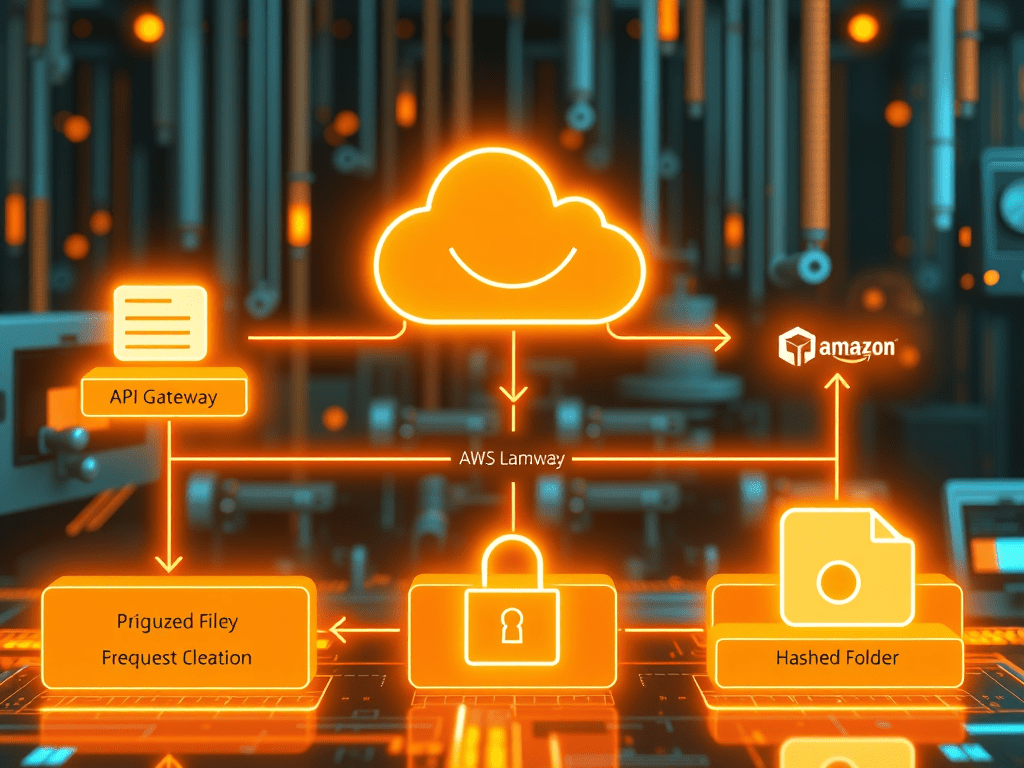
Secure S3 File Upload Using API Gateway, Lambda & PostgreSQL (Complete AWS Architecture Guide
Modern applications often allow users to upload files—documents, invoices, images, or datasets. But a production-grade upload pipeline must be secure, scalable, and well-organized. In this article, we will build a complete end-to-end architecture where: We will implement this using Amazon API Gateway, AWS Lambda, PostgreSQL, and Amazon S3. This architecture is widely used in cloud-native…
-

AI Agents in Data Engineering: Everything You Need to Know
AI agents are revolutionizing data engineering by automating tasks such as monitoring pipelines, generating SQL queries, and ensuring data quality. They enhance productivity, speed up troubleshooting, and improve data accessibility for users. While offering significant advantages, AI agents also face challenges in security, accuracy, and integration with existing systems.




 Srinimf
2 responses
[…] Informatica interview questions-part-1 […]
LikeLike
[…] Overall as per my experience Tuning is a tricky and takes time. Target optimization involves both RDBMS and Flat files. Each area you need different optimization techniques. Read online complete Informatica interview questions Part-1. […]
LikeLike