

Modern days network-connected users thrive for far better computing power. The computing power is a combination of Hardware, Software, and networks.
Here are four kinds of connected models. Those are
1.Parallel Computing

- Now a days jokingly in the software development, people follow this processing. But it s actaully agile not paralall.
- In this type of computing, all the computers keep in a single room. These systems share their work and finish.
- The best example is PARM computer India.
- Another best computer is Intel Paragon.
- Sources: Algorithms for Parallel Processing: 105 (The IMA Volumes in Mathematics and its Applications)
2. Grid Computing

- Grid means not in one place. In INDIA, Power Grid performs a common task, which supplies power. Exact way, Grid-connected computers are located at distant geographical locations and work towards a single-task.
- Sources: Grid Computing: Techniques and Applications (Chapman & Hall/CRC Computational Science)
- A central processing unit controls the grid and gets computing-power to deliver the task. The high point is, the Grid resources are heterogeneous (that means not similar).
- SETI Grid-connected Computer connects to idle-PCs all over the world and uses this power as a supercomputer.
3. Distributed Computing
- More or less meaning is similar to Grid computing. But actually, it is not. The connected powers in a Distributed model are called NODES. All the nodes work towards a common goal.
- Sources: Distributed Computing: Fundamentals, Simulations and Advanced Topics, 2ed
4. Cloud Computing
- It is the 21st century, and working and delivering task is past now. With the virtualization takes place, the physical-resources can virtualize as needed.
- The Prime goal is reduce cost, and quicker delivery.
- Resources consumption is on-demand. I need X computing-power then I will get X computing power. The other guy needs Y, and he gets Y. In general, it is elastic. It expands and shrinks according to demand – this is the power of the cloud.
- Cloud is a combination of Hardware, Software and Network. All these resources you can get on-demand.
- Nowadays, you can see, Public, Private and Hybrid models of the Cloud. Private means in the premises. Public means outside premises. Hybrid means a combination of these.
Latest from the Blog

Unlocking the Power of Databricks Genie: A Comprehensive Guide
Databricks Genie is a collaborative data engineering tool built on the Databricks Unified Analytics Platform, enhancing data analytics for businesses. Key features include collaborative workspaces, efficient data processing with Apache Spark, built-in machine learning capabilities, robust data visualization, seamless integration, and strong security measures, fostering informed decision-making.
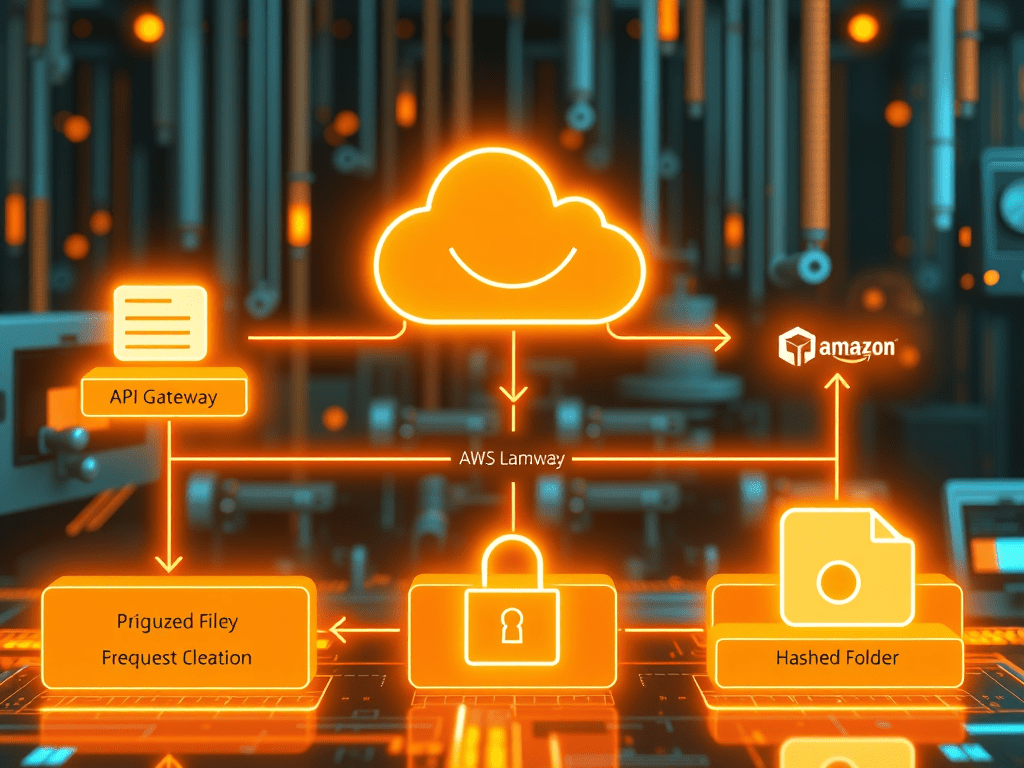
Secure S3 File Upload Using API Gateway, Lambda & PostgreSQL (Complete AWS Architecture Guide
Modern applications often allow users to upload files—documents, invoices, images, or datasets. But a production-grade upload pipeline must be secure, scalable, and well-organized. In this article, we will build a complete end-to-end architecture where: We will implement this using Amazon API Gateway, AWS Lambda, PostgreSQL, and Amazon S3. This architecture is widely used in cloud-native…

AI Agents in Data Engineering: Everything You Need to Know
AI agents are revolutionizing data engineering by automating tasks such as monitoring pipelines, generating SQL queries, and ensuring data quality. They enhance productivity, speed up troubleshooting, and improve data accessibility for users. While offering significant advantages, AI agents also face challenges in security, accuracy, and integration with existing systems.





 Srinimf
One response
[…] Related: Parallel Vs. Grid Vs. Distributed Vs. Cloud Computing […]
LikeLike