

Here are the top performed and most viewed blog posts in 2021. The topics are SQL, Python, VSAM and AWS.
How to Use Multiple Like Conditions in SQL
Here is an example on how to use multiple LIKE conditions in WHERE clause of SQL.
SQL where clause fetches records quickly when you give conditions correctly. The conditions should be indexed table columns. And, many a time, you need to filter records using like conditions.
SQL Query Examples on Multiple WHERE Conditions
Multiple conditions, how to give in the SQL WHERE Clause, I have covered in this post. Those are IN, LT, GT, =, AND, OR, and CASE. It takes more CPU time, If the WHERE condition is not proper, to fetch rows – since more rows.
15 Top AWS IAM Service Interview Questions
The identity and access management (IAM) service provide access for users (Entities). Below are the useful interview questions so that you can understand the IAM service quickly.
COBOL VSAM Files READ with START Logic
Here’s sample COBOL program that shows how to use READ, WRITE and READ NEXT statements. The READ statement is to get record randomly. The READ NEXT to read VSAM file till end of the file
12 Tricky Python Coding Interview Questions
Among the leading computer programming languages, Python takes the first place. In this post, I am sharing the 12 Python frequently asked Coding Interview Questions on the basics of Python Language.
Related posts
-

How to Create a Generic Stored Procedure for KPI Calculation (SQL + AWS Lambda)
In modern data engineering, building scalable and reusable systems is essential. Writing separate SQL queries for every KPI quickly becomes messy and hard to maintain. A better approach?👉 Use a Generic Stored Procedure powered by Dynamic SQL, and trigger it using AWS Lambda. In this blog, you’ll learn: What is a Generic Stored Procedure? A…
-

Unlocking the Power of Databricks Genie: A Comprehensive Guide
Databricks Genie is a collaborative data engineering tool built on the Databricks Unified Analytics Platform, enhancing data analytics for businesses. Key features include collaborative workspaces, efficient data processing with Apache Spark, built-in machine learning capabilities, robust data visualization, seamless integration, and strong security measures, fostering informed decision-making.
-
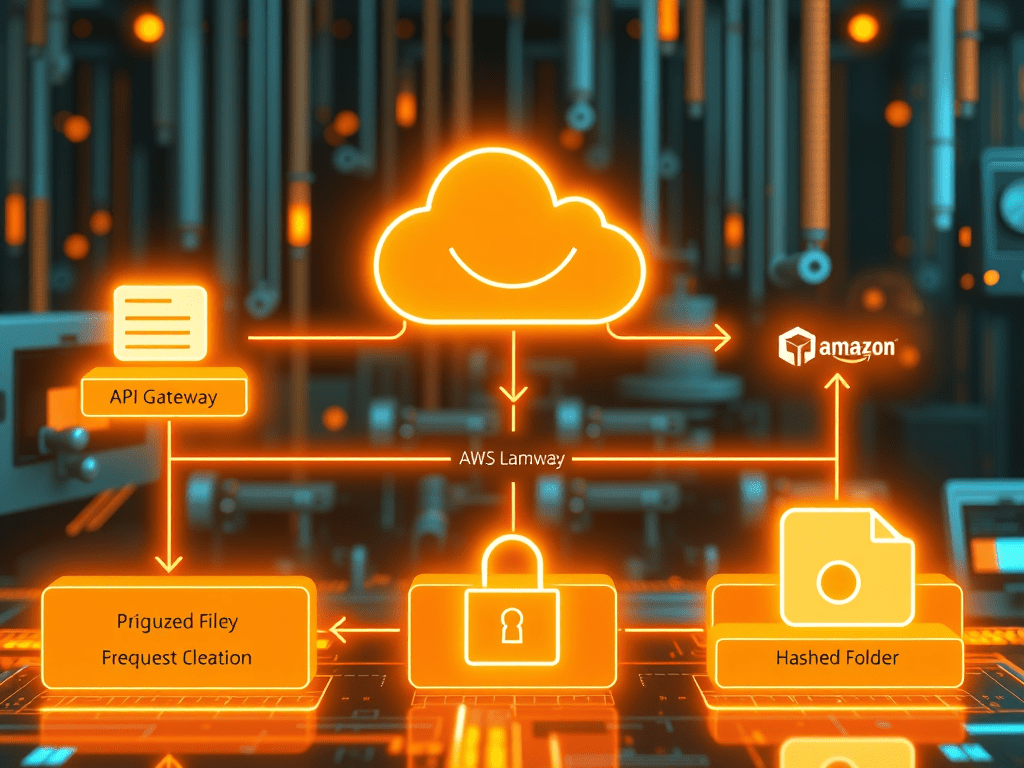
Secure S3 File Upload Using API Gateway, Lambda & PostgreSQL (Complete AWS Architecture Guide
Modern applications often allow users to upload files—documents, invoices, images, or datasets. But a production-grade upload pipeline must be secure, scalable, and well-organized. In this article, we will build a complete end-to-end architecture where: We will implement this using Amazon API Gateway, AWS Lambda, PostgreSQL, and Amazon S3. This architecture is widely used in cloud-native…




 Srinimf